Last Updated: April 20, 2026 · Medically Reviewed by Dr. Alexander Reeves, MD
Memory Acquisition · Bacosides · Neural Plasticity
Bacopa Monnieri — also called Brahmi — is a creeping herb that has been the subject of more modern clinical research for memory than almost any other botanical. In Ayurvedic medicine it has been used for over 1,400 years to support mental function and nervous system health. What modern research has added is specificity: bacopa's effects build over an 8–12 week time course, which is why quick trials consistently disappoint and why multi-bottle packages align with the biological reality.
A 2008 double-blind randomized controlled trial published in the Journal of Alternative and Complementary Medicine followed 98 healthy adults over 65 for 12 weeks. The bacopa group showed statistically significant improvements in word recall, attention, and memory compared to placebo (PMID 18611150). A 2012 systematic review of randomized trials confirmed consistent effects on memory function across the research literature (PMID 22747190).
The active compounds are triterpenoid saponins called bacosides. They appear to work through multiple mechanisms: supporting acetylcholine function, protecting neurons from oxidative stress, and modulating serotonin and dopamine pathways. The overall effect is on memory acquisition and retention — which is why users don't feel anything dramatic on day 1 but notice over weeks that they're remembering things more easily.
Cerebral Blood Flow · Flavonoids · Terpene Lactones
Ginkgo Biloba comes from one of the oldest tree species on earth — individual ginkgo trees can live over 1,000 years, and the species itself is over 200 million years old. The leaf extract has been used medicinally in China for centuries and became one of the most prescribed botanicals in Germany and France during the 1990s for age-related cognitive concerns.
Ginkgo's primary mechanism is improved cerebral blood flow. The extract's flavonoid and terpene lactone content supports vasodilation and reduces blood viscosity, allowing more blood to reach brain tissue. More blood flow means more oxygen delivery, more nutrient delivery, and better removal of metabolic waste — all of which support cognitive function. A 2015 systematic review of 9 randomized trials involving patients with mild cognitive impairment documented measurable improvements in cognition with ginkgo supplementation (PMID 26087421).
Beyond circulation, ginkgo has documented antioxidant activity and supports mitochondrial function in neurons. Important safety note: ginkgo has blood-thinning effects and can interact with anticoagulants like warfarin. Anyone on blood thinners should discuss with their physician before use.
Acetylcholinesterase Inhibition · Memory · Club Moss
Huperzine-A is a plant alkaloid extracted from Chinese club moss (Huperzia serrata). What makes it interesting for cognitive support is its mechanism: it's a natural acetylcholinesterase inhibitor — the same class of mechanism as prescription Alzheimer's medications like donepezil, though at supplement doses the effect is far milder.
Acetylcholine is the neurotransmitter most directly involved in learning and memory. The enzyme acetylcholinesterase breaks it down. When Huperzine-A inhibits that enzyme, acetylcholine levels rise, and cognitive functions dependent on acetylcholine — memory, focus, learning — are supported. A 2013 meta-analysis of 20 randomized controlled trials documented Huperzine-A's effects on cognitive measures in Alzheimer's disease patients (PMID 23985190). Importantly, the effect sizes were clinically meaningful — this is one of the better-researched natural cognitive compounds.
Huperzine-A is dosed in micrograms rather than milligrams because it's extremely potent. This is why it works best in a multi-ingredient formula like Neuro Sharp rather than at higher standalone doses.
Cell Membrane Support · Neurotransmitter Function · Phospholipid
Phosphatidylserine is a phospholipid — a class of fat that makes up the membranes surrounding every cell in your body, including neurons. It's particularly concentrated in brain tissue, where it supports cell-to-cell communication, neurotransmitter function, and the physical infrastructure of thinking and memory.
A 2010 clinical trial published in the Journal of Clinical Biochemistry and Nutrition followed elderly adults with age-related memory complaints over 6 months and documented measurable improvements in memory tests with phosphatidylserine supplementation (PMID 20523044). Phosphatidylserine has enough research support that the FDA allows specific qualified health claims about its role in cognitive function — one of very few dietary supplements to reach that bar.
Because phosphatidylserine is a structural component of brain cells rather than a signaling molecule, its effects compound gradually over months of consistent supplementation. It's not a fast-acting nootropic — it's an infrastructure supporter.
Mood Support · Hypericin · Hyperforin
St. John's Wort is a yellow-flowering plant that has been used in traditional European medicine for over 2,000 years. Its active compounds — primarily hypericin and hyperforin — influence neurotransmitter balance including serotonin, dopamine, and norepinephrine.
Mood and cognitive performance are deeply linked. Low mood or anxiety directly impairs working memory, focus, and decision-making speed. A 2008 Cochrane review of 29 clinical trials covering 5,489 patients documented St. John's Wort's effects on mild-to-moderate mood concerns (PMID 18843608). In the context of Neuro Sharp, St. John's Wort is included at supplement-level doses for mood balance rather than clinical depression treatment — supporting the emotional baseline that cognitive clarity is built on.
Important interaction note: St. John's Wort has significant interactions with SSRIs, MAOIs, and other antidepressants, birth control pills, blood thinners, and transplant medications. Anyone on prescription medications should consult a physician before using any product containing St. John's Wort.
Mitochondrial Energy · Brain Energy Metabolism · Acetylcholine Precursor
N-Acetyl L-Carnitine (also written as Acetyl-L-Carnitine or ALCAR) is a more bioavailable form of L-Carnitine that efficiently crosses the blood-brain barrier. It plays a role in transporting fatty acids into mitochondria where they're converted to cellular energy (ATP). In brain cells, this translates to more sustained mental stamina.
A 2003 meta-analysis of 21 clinical trials examined ALCAR's effects on cognitive function in mild cognitive impairment and found consistent improvements across studies (PMID 12671361). The proposed mechanisms include: supporting mitochondrial energy production, serving as a precursor for acetylcholine synthesis, and providing neuroprotective antioxidant effects.
NALT pairs particularly well with Huperzine-A and Alpha-GPC in Neuro Sharp — all three contribute to the acetylcholine support axis from different angles.
Choline Delivery · Acetylcholine Precursor · Memory Support
Alpha-GPC (Alpha-Glycerophosphocholine) is a naturally occurring compound that efficiently delivers choline across the blood-brain barrier. Choline is the raw material your body uses to make acetylcholine — so Alpha-GPC effectively fuels the acetylcholine system that Huperzine-A helps preserve. The two work synergistically.
A 2013 clinical trial investigated Alpha-GPC's effects on cognitive recovery in patients with mild cognitive impairment and documented measurable improvements in memory and attention measures (PMID 23865498). Alpha-GPC is notable for having stronger cognitive research support than other commonly used choline sources like choline bitartrate or CDP-choline in most head-to-head comparisons.
This is one of the ingredients that most directly explains the "clearer thinking" effect users often describe within the first 2 weeks of Neuro Sharp — acetylcholine support has faster-acting effects than memory-pathway ingredients like bacopa.
Adaptogen · Mental Stamina · Stress Resilience
Rhodiola Rosea is a root native to cold mountainous regions of Europe and Asia. It's classified as an adaptogen — a term for herbs that help the body adapt to stress and maintain balance. Rhodiola has been used in Scandinavian and Siberian traditional medicine for mental stamina, endurance, and resilience during long dark winters.
A 2017 systematic review of randomized trials examining Rhodiola Rosea for mental fatigue and stress-related burnout found consistent improvements across studies, particularly for sustained cognitive performance under pressure (PMID 28219059). The active compounds are rosavins and salidroside, which appear to influence cortisol regulation and neurotransmitter balance.
In the Neuro Sharp formula, Rhodiola pairs with St. John's Wort to address the stress-mood-cognition axis — recognizing that cognitive performance doesn't exist in isolation from emotional state and stress load.
No caffeine. No synthetic stimulants. No artificial colors or flavors. No GMO ingredients. No gluten. No soy. No dairy. No hidden autoship. No recurring charges. No prescription drugs. Neuro Sharp is intentionally stimulant-free — because adults who want sustained cognitive support don't need the jitters-and-crash cycle of caffeine-heavy nootropics.
Cognitive function involves multiple overlapping systems: cerebral blood flow, neurotransmitter balance (especially acetylcholine), brain-cell membrane integrity, mitochondrial energy, mood regulation, and stress adaptation. Single-ingredient products (bacopa alone, ginkgo alone) show modest effects in research because they address one dimension at a time. Multi-ingredient formulas that target multiple mechanisms simultaneously can produce additive benefits — each ingredient contributing its own modest effect, adding up to something more meaningful than any ingredient alone.
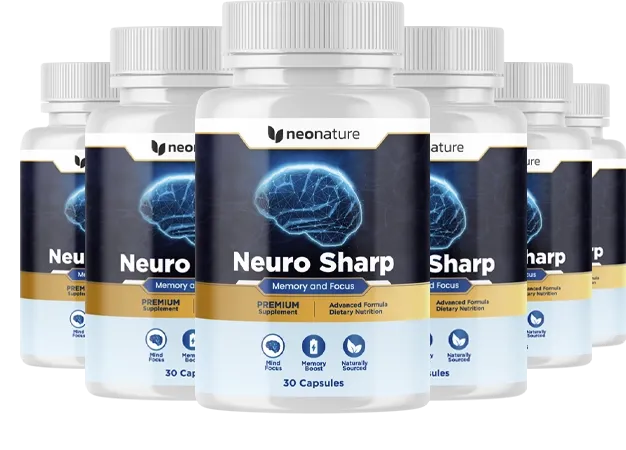
Neuro Sharp is manufactured in the United States in a facility registered with the FDA and operating under current Good Manufacturing Practice (GMP) standards. Every batch is tested for potency and contaminants. The formula is 100% natural, non-GMO, gluten-free, and contains no stimulants or synthetic additives.