Last Updated: April 20, 2026 · Medically Reviewed by Dr. Alexander Reeves, MD
Memory decline after 50 isn't inevitable or irreversible. Research from the past decade has established multiple interventions that measurably improve memory function even when started after 50. Here's the evidence-based playbook.
Aerobic exercise produces the largest documented memory improvements of any intervention tested. A landmark 2011 study at the University of Illinois followed 120 adults aged 55–80 randomized to either aerobic exercise (40 minutes, 3x/week) or stretching/toning (control) for one year. The exercise group showed measurable increase in hippocampal volume — the memory center of the brain — alongside improved memory test scores.
Prescription: 30 minutes of brisk walking (or equivalent), 5 days per week. Heart rate should feel elevated but you should still be able to hold a conversation. Add 2 resistance training sessions per week for additional cognitive benefits.
The MIND diet (Mediterranean-DASH Diet Intervention for Neurodegenerative Delay) was specifically designed for brain health. Rush University research showed people who closely followed the MIND diet had cognitive function equivalent to being 7.5 years younger than their actual age. The core pattern:
Memory consolidation happens during sleep — specifically during slow-wave deep sleep and REM. Chronic sleep deprivation directly impairs memory formation and memory retrieval. After age 50, sleep architecture naturally changes (less deep sleep, more fragmentation) making quality matter even more.
Prescription: 7–9 hours nightly, consistent schedule, cool dark room, no screens 30 minutes before bed, morning sunlight exposure within 30 minutes of waking.
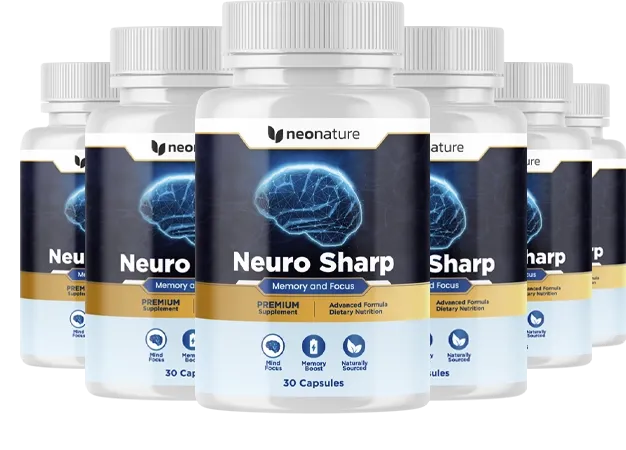
Natural 8-ingredient brain formula with Bacopa, Ginkgo, Huperzine-A, Alpha-GPC, and more. 180-day money-back guarantee — zero risk to evaluate.
Get Neuro Sharp Natural Brain Formula →Mental engagement matters, but type matters. Doing the same crossword puzzle or the same sudoku pattern thousands of times provides limited cognitive stimulation because your brain stops being challenged. What works is novel learning — acquiring new skills that force new neural pathways to form.
Examples with documented cognitive benefits: learning a new language, learning to play a musical instrument, learning to paint or draw, learning new forms of dance (which combine physical and cognitive challenge), taking continuing education courses, learning new complex games. The harder and more novel, the better.
Loneliness is associated with accelerated cognitive decline independent of other factors. Regular meaningful social engagement appears to be cognitively protective. This isn't about being extroverted — it's about having people in your life you engage with regularly, in mentally substantive ways.
Supplementation fills specific gaps and supports specific mechanisms the lifestyle foundations don't fully address. The evidence-supported candidates for memory after 50:
Week 1–2: Establish sleep schedule. Start walking 15 minutes daily. Add leafy greens and berries to diet. Baseline memory self-assessment.
Week 3–4: Increase walking to 30 minutes. Start multi-ingredient nootropic. Pick one novel learning activity (language app, instrument lessons, etc.)
Week 5–8: Fully established routine. Expect early cognitive changes — less brain fog, better focus during the day.
Week 9–12: Bacopa effects peak around this window. Most people notice clearly improved recall for names, conversations, and details by the end of 90 days.
Yes. Neuroplasticity continues throughout life, and research shows multiple interventions measurably improve memory function even when started after 50. The best-documented strategies: aerobic exercise (increases hippocampal volume), Mediterranean diet, quality sleep, mental engagement with novel learning, social connection, and targeted supplementation where indicated.
Moderate aerobic exercise (brisk walking, swimming, cycling) 30 minutes per day, 5 days per week has the strongest research support for memory function in adults over 50. Exercise increases BDNF (brain-derived neurotrophic factor), improves cerebral blood flow, and stimulates neurogenesis in memory-critical brain regions. Resistance training 2x/week adds additional cognitive benefits.
The MIND diet (Mediterranean + DASH combined) has the strongest research for memory protection. Key foods: leafy greens daily, berries 2+ times/week, nuts daily, whole grains, fish 2+ times/week, olive oil as primary fat, beans 3+ times/week, poultry 2+ times/week. Limit red meat, butter, cheese, sweets, and fried foods.
Some do. Bacopa Monnieri has the strongest clinical research for memory enhancement with documented 12-week effects. Ginkgo Biloba has research support for age-related cognitive function through cerebral blood flow effects. Phosphatidylserine has FDA-qualified health claims for cognitive function. Multi-ingredient formulas combining these address memory from multiple angles simultaneously.